
how to say “two hundred (shekel discount)” in Hebrew
having trouble seeing the print?
מָאתַיִם
 |
| this week’s video dose of Hebrew! |
In Western languages such as English, Spanish, German, etc, we add a number from 1-10 before a multiple of 100. For example: one hundred, two hundred, three hundred, etc.
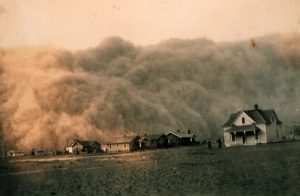 |
| the Dust Bowl of the 1930’s American countryside |
In Hebrew and other languages, the second item in such a count gets a special name that ends with the sound AH-yeem .
An example from the Torah portion
to be read this Shabbat by Jews around the world:
כִּי-זֶה שְׁנָתַיִם הָרָעָב, בְּקֶרֶב הָאָרֶץ; וְעוֹד חָמֵשׁ שָׁנִים, אֲשֶׁר אֵין חָרִישׁ וְקָצִיר (בְּרֵאשִׁית מ”ה:ו’)
For two years now there has been a famine in the land, and for the next five years there will not be plowing and reaping (Genesis 45:6)
Here the word שְׁנָתַיִם means two years. Compare it with the others in the list below to see the difference:
שָׁנָה אַחַת – one year
שְׁנָתִים – two years
שָׁלֹש שָׁנִים – three years
אַרְבַּע שָׁנִים – four years
חָמֵשׁ שָׁנִים – five years
שֵׁשׁ שָׁנִים – six years
שֶׁבַע שָׁנִים – seven years
שְׁמוֹנֶה שָׁנִים – eight years
תֵּשַׁע שָׁנִים – nine years
עֶשֶׂר שָׁנִים – ten years
 This AH-eem ending indicates other multiples of two in the Hebrew language, such as:
עֵינַיִם – eyes
גִּבְעָתַיִם – two hills
(name of a city adjacent to Tel Aviv)
(name of a city adjacent to Tel Aviv)
מָאתַיִם – two hundred
Here’s that last word used in a sentence:
מִי שֶׁנִּרְשָׁם לְקוּרְס שֶׁלָּנוּ עַד יוֹם רִאשׁוֹן, מְקַבֵּל הֲנָחָה שֶׁל מָאתַיִם שְׁקָלִים.
Whoever registers for a course of ours by Sunday gets a 200-shekel discount.
Note: The AH-eem ending indicates a doubling, but it is not used for all nouns.
 Make this dose of Hebrew yours by using it in a sentence. You can write your sentence on the wall of our Facebook page, and we’ll correct it for you if it’s got errors.
You can further build your Hebrew vocabulary with…
 |
| with a special discount for Ktzat Ivrit enthusiasts like yourself |
