how to say “to look at” in Hebrew
having trouble seeing the print?
לְהִסְתַּכֵּל (עַל)

Despite the excessive visual profanity and the often distasteful way he conducts himself, I’m a fan of Sacha Baron Cohen.
When I saw Borat in Los Angeles a few years ago, I was apparently the only Jew in the theater – or at least the only person who understood Hebrew – since I heard no one else laughing when the main character spoke Kazakhi – which was really Hebrew with a Russian accent.
In character, Borat approaches an American woman selling items at a yard sale. But in his mind, this woman is planning to cast a spell on him, and the items she is selling are actually stolen treasures.
He tells her, “I will look on your treasures” – which you might recognize as a literal translation from the Hebrew לְהִסְתַּכֵּל עַל – to look at… or literally, to look on.
– to look at… or literally, to look on.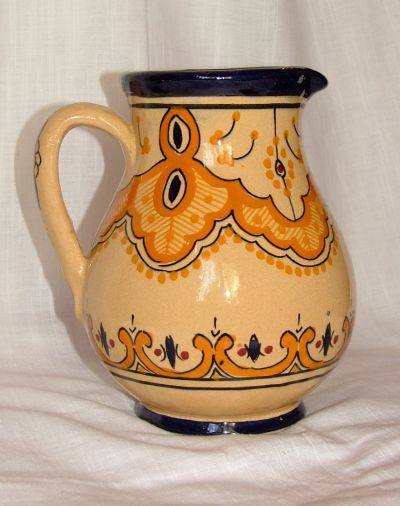
The word להסתכל is a reflexive-intensive verb coming from the root ס.כ.ל (s.k.l), a modified version of the root שׂ.כ.ל (s.k.l) meaning intellect. When we look at something we perceive it with our minds.
is a reflexive-intensive verb coming from the root ס.כ.ל (s.k.l), a modified version of the root שׂ.כ.ל (s.k.l) meaning intellect. When we look at something we perceive it with our minds.Admittedly, the preposition following להסתכל isn’t always על (on). It was once ב (usually in), as in this statement by Rabbi Meir in the Mishnah (Avot 4:26):
(on). It was once ב (usually in), as in this statement by Rabbi Meir in the Mishnah (Avot 4:26):אַל תִּסְתַּכֵּל בַּקַּנְקַן אֶלָּא בְּמַה שֶׁיֵּשׁ בּוֹ.
Don’t look at the jug but rather what it is in it.
It’s the Hebrew equivalent to don’t judge a book by its cover.

Enjoying Your Daily Dose of Hebrew?