
how to say “anonymous” in Hebrew

This one’s for my friend Benjy, who challenged me to introduce words that he might not yet know.
The more commonly-used translation of anonymous is also the one borrowed from another language (English, which in turn formed the word from Greek) – אָנוֹנִימִי (ah-noh-NEE-mee).
But as a participant in the (enormously successful) effort to revitalize the ancient Hebrew language in modern-day use, the Israeli media prefers to use words originating in ancient Jewish literature – the Bible and the Talmud, among others – when saying something that could otherwise be expressed using foreign words.
Thus you’re likely to find in the media the word אַלְמוֹנִי (ahl-moh-NEE) used to express anonymous, such as in the title of this article: סֵפֶר תּוֹרָה נֶעֱזָב בַּכֹּתֶל עַל יְדֵי אִישׁ אַלְמוֹנִי – a Torah scroll was left at the Wailing Wall by an anonymous man (SEH-fehr toh-RAH neh-eh-ZAHV bah-KOH-tel al yeh-DEH-ee eesh ahl-moh-NEE).
So what is the source in ancient Jewish literature?
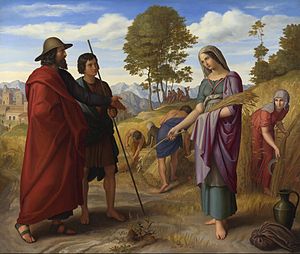
It’s in the Bible – more specifically, Ruth 4:1 (in Hebrew and in English), where an anonymous relative of Boaz, פְּלוֹנִי אַלְמוֹנִי (ploh-NEE ahl-moh-NEE) refuses to marry Ruth… so instead Boaz marries her, and together they engender a line of descendants leading to King David.
And as for פלוני אלמוני? Well, he fades into anonymity.
I’ve seen his amazing art at Hechal Shlomo and even acquired a piece myself.
It’s open throughout the summer.
