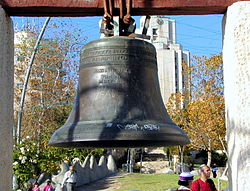
how (and why) to say “bell” in Hebrew


[audioclip url=”https://archive.ulpan.com/wp-content/uploads/2015/05/נהג-צמוד-1.m4a” /]נֵהָג צָמוּד As you may recognize, chauffeur comes directly from French. Hebrew does not borrow the word for such a personal driver from another language, but rather comes up with its own term: נהג צמוד[audioclip url=”https://archive.ulpan.com/wp-content/uploads/2015/05/נהג-צמוד-1.m4a” /] – literally, linked driver, where נהג[audioclip url=”https://archive.ulpan.com/wp-content/uploads/2015/05/נהג-צמוד-2.m4a” /] means driver and צמוד[audioclip url=”https://archive.ulpan.com/wp-content/uploads/2015/05/נהג-צמוד-3.m4a” /] means linked or stuck to. For example:…
[audioclip url=”https://archive.ulpan.com/wp-content/uploads/2014/10/שרירי-1.m4a” /]שְׁרִירִי The Hebrew word for muscle is שריר[audioclip url=”https://archive.ulpan.com/wp-content/uploads/2014/10/שרירי-2.m4a” /]. For example: [audioclip url=”https://archive.ulpan.com/wp-content/uploads/2014/10/שרירי-3.m4a” /]מתחתי שריר ברגל, אני לא רוצה לזוז. I pulled (stretched) a muscle in my (the) leg, I don’t want to move. Likewise, someone muscular is שרירי[audioclip url=”https://archive.ulpan.com/wp-content/uploads/2014/10/שרירי-1.m4a” /] if he’s a male, and שרירית[audioclip url=”https://archive.ulpan.com/wp-content/uploads/2014/10/שרירי-4.m4a” /] if she’s a female. For…
[audioclip url=”https://archive.ulpan.com/wp-content/uploads/2020/02/תורם-נתרם-#.m4a” /]תּוֹרֵם וְנִתְרָם The Hebrew word for to donate is לתרום[audioclip url=”https://archive.ulpan.com/wp-content/uploads/2020/02/תורם-נתרם-#.m4a” /] (a simple verb), while a donation is a תרומה[audioclip url=”https://archive.ulpan.com/wp-content/uploads/2020/02/תורם-נתרם-#.m4a” /]. Likewise, a donor is a תורם[audioclip url=”https://archive.ulpan.com/wp-content/uploads/2020/02/תורם-נתרם-#.m4a” /] if he’s male or תורמת[audioclip url=”https://archive.ulpan.com/wp-content/uploads/2020/02/תורם-נתרם-#.m4a” /] if she’s female. For example: [audioclip url=”https://archive.ulpan.com/wp-content/uploads/2020/02/תורם-נתרם-#.m4a” /]תורמים גדולים מגיעים מחר לבקר בבית החולים. Big donors are coming…
חֹמֶר לְשִׁנּוּן[audioclip url=”https://archive.ulpan.com/wp-content/uploads/2014/10/review-1.mp3″ /] Review Material Can’t read Hebrew yet? You spent time on your Hebrew this week. Use these review materials to make it yours to keep. Flashcards Game Test [audioclip url=”https://archive.ulpan.com/wp-content/uploads/2014/10/review-2.mp3″ /]שַׁבָּת שָׁלוֹם, וְסוֹף שָׁבוּעַ נָעִים! Shabbat Shalom, and have a nice weekend!
תור The word, תּוֹר (tohr) has various meanings in Hebrew. One of these meanings is a line or a queue. For example, חִכִּיתִי בַּתּוֹר חֲמֵש שָׁעוֹת (hee-KEE-tee bah-TOHR hah-MESH shah-OHT) means I waited in line for five hours. Another usage of this same meaning is תור meaning a place in line, or an appointment….
[audioclip url=”https://archive.ulpan.com/wp-content/uploads/2015/05/פשטות-1.m4a” /]פַּשְׁטוּת The other day we saw the word פשוט[audioclip url=”https://archive.ulpan.com/wp-content/uploads/2015/05/פשטות-2.m4a” /] – simple. In today’s culture of big data and instant gratification, simplicity has become a sought-after virtue. The Hebrew word for it is פשטות[audioclip url=”https://archive.ulpan.com/wp-content/uploads/2015/05/פשטות-1.m4a” /]. For example: [audioclip url=”https://archive.ulpan.com/wp-content/uploads/2015/05/פשטות-3.m4a” /]איך הפשטות חסרה לנו בחיי היום-יום! How missing is simplicity from our day-to-day life!…