how to say “to give change” in Hebrew


having trouble seeing the print?

לִפְרוֹט


Class starts January 29th!
Check out Ulpan La-Inyan’s 
now also in Ramat Beit Shemesh!


Truth is, the expression לָתֵת עֹדֶף (lah-TET OH-def) – to give change – does exist.
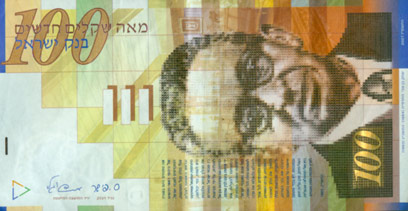
שטר של 100 שקל

But when asking for change for a bank note or a more valuable coin, the verb is לִפְרוֹט (leef-ROHT) – as in, ?אֲתְּ יְכוֹלָה לִפְרוֹט לִי שְׁטָר שֶׁל מֵאָה שְׁקָלִים (aht yeh-khoh-LAH leef-ROHT lee sheh-TAHR shel meh-AH sheh-kah-LEEM?) – can you (a female) change for me a note of one hundred shekels?


לפרוט comes from the root פ.ר.ט (p.r.t) meaning a part separated from the whole. The root appears in other common words such as פְּרָטִי (peh-rah-TEE) – private (an item of knowledge separated from common knowledge) and פְּרָט (peh-RAHT) – detail.


Further build your Hebrew vocabulary with…

Similar Posts

  • daily video – how to say “welcome!” in Hebrew

    To slow down the audio or to turn on captions (CC), start playing the video and then click the settings icon ⚙️. LEARNING TIPS Hebrew beginners Watch with English captions a few times, then with Hebrew captions, then without captions, and see what you understand. Intermediate learners Watch without captions, pausing to write down what...
  • in Hebrew, there’s “to share” and there’s “to share”

    להתחלק, לשתף   To share a thing with one or more people – such as rent for an apartment – is (le-heet-hah-LEK).   To share a feeling or an experience, however, is (le-shah-TEF). For example, רָחֵל שִׁתְּפָה אוֹתִי עַל הַטִּיּוּל שֶׁלָּהּ לְאֵירוֹפָּה (rah-HEL sheet-FAH oh-TEE ahl ha-tee-YOOL sheh-LAH le-ei-ROH-pah) – Rachel shared with me about her…

  • how to say “to remind” in Hebrew

    [audioclip url=”https://archive.ulpan.com/wp-content/uploads/2014/10/להזכיר-1.m4a” /]לְהַזְכִּיר לזכור[audioclip url=”https://archive.ulpan.com/wp-content/uploads/2014/10/להזכיר-2.m4a” /] is a simple verb of the root ז.כ.ר[audioclip url=”https://archive.ulpan.com/wp-content/uploads/2014/10/להזכיר-3.m4a” /] – to remember. For example: [audioclip url=”https://archive.ulpan.com/wp-content/uploads/2014/10/להזכיר-4.m4a” /]את זוכרת אותי? Do you (a female) remember me? To cause someone to remember – to remind – is the active-causative verb להזכיר[audioclip url=”https://archive.ulpan.com/wp-content/uploads/2014/10/להזכיר-1.m4a” /]. For example: [audioclip url=”https://archive.ulpan.com/wp-content/uploads/2014/10/להזכיר-5.m4a” /]אני לא טוב בשמות, תזכירי לי…

  • how to say “to unite” in Hebrew

    להתאחד   If you live in Israel, surely you’ve heard of the health care provider, מְאוּחֶדֶת (meh-oo-KHEH-deht). In English, it would be called United – like the airline. The word is feminine since it refers to קוּפַּת חוֹלִים (koo-PAHT khoh-LEEM) – health care provider (literally, “sick people’s register” – we could also use some health care…

  • scholarship opportunity for Ulpan La-Inyan course

    Dear YDDH subscriber, This summer, Ulpan La-Inyan is granting a full scholarship to one educator and one college/university student, for any one of our conversational-Hebrew group courses to be taken in June, July or August. As my audience, I extend my personal invitation to you or someone you know to apply for a scholarship. To do so, follow the appropriate link: We…

  • how to say “to call a spade a spade” in Hebrew

    [audioclip url=”https://archive.ulpan.com/wp-content/uploads/2014/10/לקרוא-לילד-בשמו-1.m4a” /]לִקְרוֹא לַיֶּלֶד בִּשְׁמוֹ In researching the English expression to call a spade a spade, I discovered that it might be offensive to some. So let’s skip straight to the parallel Hebrew term. לקרוא לילד בשמו[audioclip url=”https://archive.ulpan.com/wp-content/uploads/2014/10/לקרוא-לילד-בשמו-1.m4a” /] means literally to call the boy by his name. We use it when we want to stop beating around the bush…