how to say “change” (in your pocket) in Hebrew


having trouble seeing the print?

עֹדֶף


Class starts January 29th!
Check out Ulpan La-Inyan’s 
now also in Ramat Beit Shemesh!


This Biblical Hebrew word means excess or surplus – in Modern Hebrew, its main meaning is change in the form of coins or that which one receives after paying too much in a transaction. 
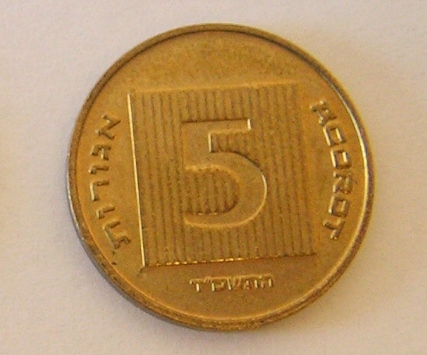
מטבע של 5 אג'

For example… הַקּוֹלָה עוֹלָה שְׁמוֹנָה שְׁקָלִים, וְאַתָּה נָתַתָּ לִי עֲשָׂרָה. אֲנִי חַיָּב לְךָ עֹדֶף (hah-KOH-lah oh-LAH sheh-moh-NAH sheh-kah-LEEM, veh-ah-TAH nah-TAH-tah lee ah-sah-RAH. ah-NEE khah-YAHV leh-KHAH OH-def) – The cola costs eight shekels, and you (a male) gave me ten. I (also a male) owe you change.


Likewise, עודף מִשְׁקָל (OH-def meesh-KAHL) is excess weight.


The way a Hebrew root tends to spawn many different words, you might expect the verb to give change to be לַעֲדוֹף (lah-ah-DOHF) – a fictitious simple פעל verb, or perhaps לְעַדֵּף (leh-ah-DEF) – a fictitious active-intensive פיעל verb. But the truth is that the word for to give change comes another root altogether.

What’s the word? You’ll have to sit tight until tomorrow…


Opportunity to make a difference

You can support the Koby Mandell Foundation and get a great workout by running the Jerusalem 10k on March 16. 


Contact Ellen for details: ellen

Similar Posts

  • how to say “to give thanks” in Hebrew

    [audioclip url=”https://archive.ulpan.com/wp-content/uploads/2020/08/להודות-#.m4a” /]לְהוֹדוֹת The Hebrew word for to thank or to give thanks is להודות[audioclip url=”https://archive.ulpan.com/wp-content/uploads/2020/08/להודות-#.m4a” /], as in: [audioclip url=”https://archive.ulpan.com/wp-content/uploads/2020/08/להודות-#.m4a” /]אני רוצה להודות לכם על הערב הנהדר הזה. I want to thank you guys for this great evening. להודות also means to acknowledge and to admit: when we give thanks, we are acknowledging what someone else has…

  • how to say “tough” in Hebrew

    קָשׁוּחַ[audioclip url=”https://archive.ulpan.com/wp-content/uploads/2014/10/קשוח-1.mp3″ /] The word for hard is קָשֶׁה[audioclip url=”https://archive.ulpan.com/wp-content/uploads/2014/10/קשוח-2.mp3″ /], whose root is the three letters that appear in the word. The word for tough, as a character trait, is קָשׁוּחַ[audioclip url=”https://archive.ulpan.com/wp-content/uploads/2014/10/קשוח-1.mp3″ /]. Its root is ק.שׁ.ח (k.sh.kh), almost the same as קשה. The word in context: [audioclip url=”https://archive.ulpan.com/wp-content/uploads/2014/10/קשוח-3.mp3″ /]הִיא בּוֹסִית קְשׁוּחָה מְאֹד. She’s…

  • TODAY’S OUR BIRTHDAY – and here’s how to say “thank you” in Hebrew

    having trouble seeing the print? תּוֹדָה     Learn to Speak Hebrew With Us, Online (or in person)     Sign up by tonight at midnight Israel time for a special discount on local and online classes.     Today marks five years since the first Ulpan La-Inyan class of four people took place in my apartment in Jerusalem.  …

  • daily video – how to say “to stay in place” in Hebrew

    To slow down the audio or to turn on captions (CC), start playing the video and then click the settings icon ⚙️. LEARNING TIPS Hebrew beginners Watch with English captions a few times, then with Hebrew captions, then without captions, and see what you understand. Intermediate learners Watch without captions, pausing to write down what...
  • how to say “to cut corners” in Hebrew

    [audioclip url=”https://archive.ulpan.com/wp-content/uploads/2014/10/לעגל-פינות-1.m4a” /]לְעַגֵּל פִּנּוֹת Last week we saw the Hebrew expression for to tie up loose ends – לסגור פינות[audioclip url=”https://archive.ulpan.com/wp-content/uploads/2014/10/לעגל-פינות-2.m4a” /] – literally, to close corners. For example: [audioclip url=”https://archive.ulpan.com/wp-content/uploads/2014/10/לעגל-פינות-3.m4a” /]סגירת פינות היא סימן של מקצועיות. Tying up loose ends is a mark of professionalism. Don’t confuse לסגור פינות with another expression – לעגל פינות[audioclip url=”https://archive.ulpan.com/wp-content/uploads/2014/10/לעגל-פינות-1.m4a”…

  • how to say “doing” in Hebrew

    [audioclip url=”https://archive.ulpan.com/wp-content/uploads/2020/05/עשייה-#.m4a” /]עֲשִׂיָּה Yesterday we saw the word תעשייה[audioclip url=”https://archive.ulpan.com/wp-content/uploads/2020/05/עשייה-#.m4a” /] meaning industry, which comes from the root ע.ש.ה[audioclip url=”https://archive.ulpan.com/wp-content/uploads/2020/05/עשייה-#.m4a” /] meaning doing, action. A simpler word coming from that root is עשייה[audioclip url=”https://archive.ulpan.com/wp-content/uploads/2020/05/עשייה-#.m4a” /] – doing itself or action, the gerund form of לעשות[audioclip url=”https://archive.ulpan.com/wp-content/uploads/2020/05/עשייה-#.m4a” /] – to do. This word is powerful in its simplicity: עשייה…