
how to say “parents” in Hebrew
[audioclip url=”https://archive.ulpan.com/wp-content/uploads/2015/05/הורים-1.m4a” /]הוֹרִים
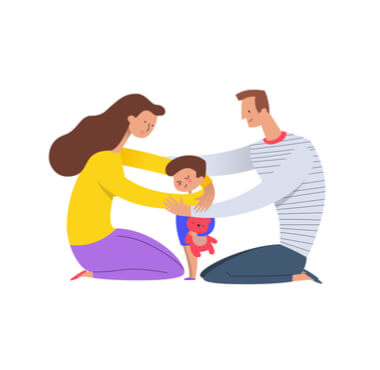
English speakers who didn’t grow up using the kh sound (as in chutzpah) often find it difficult to distinguish between the Hebrew h and kh sounds.
Thus when they learn Hebrew, they might confuse the words חורים[audioclip url=”https://archive.ulpan.com/wp-content/uploads/2015/05/הורים-2.m4a” /] – holes and הורים[audioclip url=”https://archive.ulpan.com/wp-content/uploads/2015/05/הורים-1.m4a” /] – parents.
הורים is the plural form of הורה[audioclip url=”https://archive.ulpan.com/wp-content/uploads/2015/05/הורים-3.m4a” /] – a male parent (a female parent is a הורה[audioclip url=”https://archive.ulpan.com/wp-content/uploads/2015/05/הורים-4.m4a” /], which has no relation to the Horah dance). The root of these words is ה.ר.ה[audioclip url=”https://archive.ulpan.com/wp-content/uploads/2015/05/הורים-5.m4a” /], the same as that of הריון[audioclip url=”https://archive.ulpan.com/wp-content/uploads/2015/05/הורים-6.m4a” /] – pregnancy: a parent is one who brings a child into the world, raises that child, or both.
For example:
[audioclip url=”https://archive.ulpan.com/wp-content/uploads/2015/05/הורים-7.m4a” /]ההורים שלי גדלו בשנות השישים.
My parents grew up in the sixties.
The singular form of חורים, on the other hand, is חור[audioclip url=”https://archive.ulpan.com/wp-content/uploads/2015/05/הורים-8.m4a” /].
For example:
[audioclip url=”https://archive.ulpan.com/wp-content/uploads/2015/05/הורים-9.m4a” /]יש לי חור בנעל.
I have a hole in my shoe.