
today there was a big one – how do you say “demonstration” in Hebrew?
הפגנה
To my Level-5-ers – you’ve already had this lesson. Consider it review :).
The Hebrew word for demonstration – political or otherwise – is הַפְגָּנָה (hahf-gah-NAH).
To demonstrate or to display is לְהַפְגִּין (le-hahf-GHEEN). For example, הוּא מַפְגִּין עִנְיָן בַּלִּמּוּדִים (hoo mahf-GHEEN een-YAHN bah-lee-moo-DEEM) – he displays interest in (his/the) studies.
Today there was a big הפגנה throughout Israel, and it was painted by the media as an incredible statement of racism made by the חָרֵדִי (hah-reh-DEE) – “Ultra Orthodox” – segment of the population.
I’m glad I allowed reason to take over my anger enough to ask the question, what’s really going on here? I’m glad, because I discovered that the issue isn’t racism or discrimination at all. More importantly, I (again) realize that there are always two sides to a story. Unfortunately, the media has tended to favor one side in this case, which has resulted in nothing less than hatred.
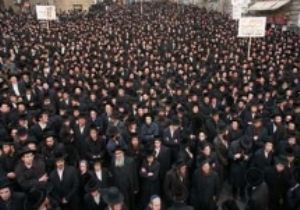
If you’re interested in this issue, I invite you to read this article, sent to me by one of my Level-5-ers.
שַׁבָּת שָׁלוֹם לְכוּלָם (shah-BAHT shah-LOHM le-khoo-LAHM) – a Sabbath of peace to all.