
how to say “to rely (upon)” in Hebrew
having trouble seeing the print?


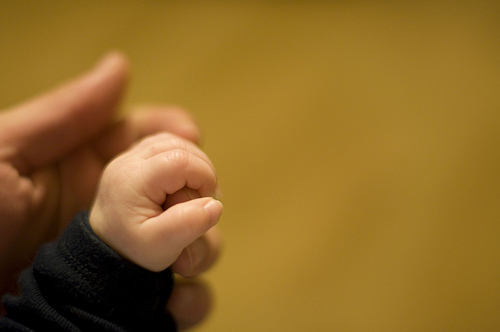
The Torah portion to be read this Shabbat by Jews around the world continues to detail the sacrificial practices in the Temple. One of event in the process of offering a sacrifice was the person’s resting his hands on the head of the animal, thereby forging a connection with the animal that was to signify the person’s own personal sacrifice. This act was called סְמִיכַת יָדַיִם (seh-mee-KHAHT yah-DAH-yeem) – literally, resting of hands.
Likewise, one word might rest upon another in Hebrew, as in the phrase בֵּית הַקָּפֶה (BEH-yeet hah-kah-FEH) – the coffee house or the house of coffee. In that phrase, בית relies upon הקפה to express its full meaning. This grammatical phenomenon is called סְמִיכוּת (seh-mee-KHOOT).
 |
| by schmollmolch |
Later Hebrew took this physical act of resting on something and made it abstract – so that לִסְמוֹך (lees-MOHKH) meant to rest on something in the figurative sense as well: to rely upon something… or someone. For example, סְמוֹךְ עָלַי (smohkh ah-LAH-ee) is the Modern-Hebrew equivalent of the English, trust me.
The act of ordaining a rabbi exemplifies both the literal and figurative meanings of לסמוך. The act dates back to Moses placing his hands upon his successor, Joshua, thereby displaying his reliance upon and trust in Joshua to lead the Israelite people well.
שבת שלום, וסוף שבוע נעים לכולם!
Shabbat Shalom, and a pleasant weekend to all!
April 8, especially for art lovers.