how to say “to encourage” in Hebrew


לְעוֹדֵד


This Sunday, our classes begin afresh in Jerusalem, Efrat and Raanana (Tel Aviv coming very soon!). Our classes are small – and we’ve got a few spots left in all of them. 
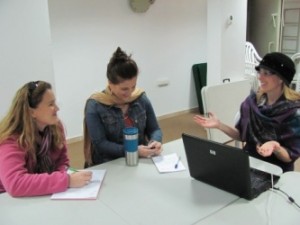
שיעור לימוד עברית ברעננה
a Raanana class at work/play


אֲנִי מְעוֹדֵד אֶתְכֶם (ah-NEE meh-oh-DED et-KHEM) – I encourage you (plural) to find out more by visiting our calendar page.


To encourage is לְעוֹדֵד (leh-oh-DED). It loosely fits into the פיעל (pee-EL) “active-intensive” form.


Encouragement is עִדוּד (ee-DOOD) or חִזּוּק (khee-ZOOK), coming from the word for strong – חָזָק (khah-ZAHK).



Similar Posts

  • how to say “to tick” in Hebrew

      having trouble seeing the print? לְתַקְתֵּק       Never experienced Ulpan La-Inyan?  We’re offering free demo classes  throughout the summer.   Sign up for yours now! The other day I introduced the Hebrew word לִדְפוֹק – to knock (leed-FOHK), which also means, in non-literal sense to move along smoothly. The Hebrew word that means to tick is לְתַקְתֵּק (leh-tahk-TEK), an…

  • how to say “novel” in Hebrew

    [audioclip url=”https://archive.ulpan.com/wp-content/uploads/2020/02/רומן-#.m4a” /]רוֹמָן The Hebrew word for a novel that people read is רומן[audioclip url=”https://archive.ulpan.com/wp-content/uploads/2020/02/רומן-#.m4a” /]. It comes from the Russian, which comes from the French, which derives from Latin. For example: [audioclip url=”https://archive.ulpan.com/wp-content/uploads/2020/02/רומן-#.m4a” /]מי יכתוב את הרומן הישראלי הגדול? Who will write the Great Israeli Novel? Novel in the sense of new is חדש[audioclip url=”https://archive.ulpan.com/wp-content/uploads/2020/02/רומן-#.m4a”…

  • how to say “s/he looks like…” in Hebrew

    having trouble seeing the print? דּוֹמֶה check out music.ulpan.com To express that someone looks like someone else, or that something looks like something else, use the word meaning resembles: דּוֹמֶה (one male/masculine object) דּוֹמָה (one female/feminine object) דּוֹמִים (more than one male/masculine object) דּוֹמוֹת (more than one female/feminine object) הַתְּאוֹמִים מְאֹד דּוֹמִים. The twins looks a lot alike. The similarity that דומה  expresses is not limited to the…

  • A unique Hebrew word about holding someone else’s feelings

    [audioclip url=”https://archive.ulpan.com/wp-content/uploads/2019/01/להכיל-#.m4a” /]לְהָכִיל This word truly has no equal in English, and yet it’s a common word when speech gets tender and loving. להכיל[audioclip url=”https://archive.ulpan.com/wp-content/uploads/2019/01/להכיל-#.m4a” /] means literally to contain, as in: [audioclip url=”https://archive.ulpan.com/wp-content/uploads/2019/01/להכיל-#.m4a” /]המוצר הזה עלול להכיל אגוזים. This product may contain nuts. But on a metaphorical level, להכיל means to contain someone else’s feelings, to…

  • daily video – how to say “don’t mess with me” in Hebrew

    To slow down the audio or to turn on captions (CC), start playing the video and then click the settings icon ⚙️. LEARNING TIPS Hebrew beginners Watch with English captions a few times, then with Hebrew captions, then without captions, and see what you understand. Intermediate learners Watch without captions, pausing to write down what...
  • how to say “tendency” in Hebrew

      נְטִיָּה   Can’t read Hebrew yet?     The Hebrew verb לִנְטוֹת   , of the root נ.ט.ה (n.t.h), means to tend or to be inclined.    For example:   אֲנִי נוֹטֶה לְהַצְבִּיעַ לְמִפְלָגוֹת קְטַנּוֹת. I (a male) tend to vote for a small parties.     Likewise, נְטִיָּה means tendency, as in the phrase…