how to say “sautéed” in Hebrew


מֻקְפָּץ


Yesterday evening I had dinner with my friend Avi, who takes pride in his delicious, healthy cooking. He fried us up some schnitzel, but when I commented that he was frying it in olive oil instead of Canola, he corrected me, saying that was sautéeing, not frying. 
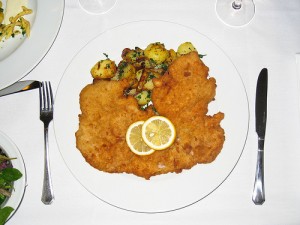
שניצל עם תפו"א


Sauté comes from French. The closest Hebrew word we have that captures the meaning is מֻקְפָּץ (mook-PAHTS) – so that sautéed (or stir-fried) vegetables are יְרָקוֹת מוקפצִים (yeh-rah-KOHT mook-pah-TSEEM). מוקפץ means, literally, caused to jump. The word fits into the הופעל (hoof-AHL) verb paradigm, the passive form of the הפעיל (heef-EEL).


To fry, on the other hand, is לְטַגֵּן (leh-tah-GHEN), a פיעל (pee-EL) verb.


I maintain that Avi was frying. Either way, the schnitzel came out tasty.


Registration is open for our spring session!
Check out our state-of-the-art conversational Hebrew courses

in Jerusalem, Efrat and Raanana.

Similar Posts

  • how to say “timing” in Hebrew

    [audioclip url=”https://archive.ulpan.com/wp-content/uploads/2022/04/תזמון-#.m4a” /]תִּזְמוּן, עִיתּוּי Hebrew has several words for time. The common one is זמן[audioclip url=”https://archive.ulpan.com/wp-content/uploads/2022/04/תזמון-#.m4a” /], as in: [audioclip url=”https://archive.ulpan.com/wp-content/uploads/2022/04/תזמון-#.m4a” /]אין לי זמן! I don’t have time! זמן yields the word תזמון[audioclip url=”https://archive.ulpan.com/wp-content/uploads/2022/04/תזמון-#.m4a” /] – timing, as in: [audioclip url=”https://archive.ulpan.com/wp-content/uploads/2022/04/תזמון-#.m4a” /]הגענו ביחד, בתזמון מושלם. We arrived together – (in) perfect timing. A fancier word for time is…

  • how to say “length” and “width” in Hebrew

    [audioclip url=”https://archive.ulpan.com/wp-content/uploads/2020/10/אורך-רוחב-#.m4a” /]אוֹרֶךְ וְרוֹחַב The Hebrew word for long is ארוך[audioclip url=”https://archive.ulpan.com/wp-content/uploads/2020/10/אורך-רוחב-#.m4a” /], while wide is רחב[audioclip url=”https://archive.ulpan.com/wp-content/uploads/2020/10/אורך-רוחב-#.m4a” /]. For example: [audioclip url=”https://archive.ulpan.com/wp-content/uploads/2020/10/אורך-רוחב-#.m4a” /]החדר הזה ארוך אבל לא מספיק רחב. This room is long but not wide enough. Length is אורך[audioclip url=”https://archive.ulpan.com/wp-content/uploads/2020/10/אורך-רוחב-#.m4a” /], while width is רוחב[audioclip url=”https://archive.ulpan.com/wp-content/uploads/2020/10/אורך-רוחב-#.m4a” /]. For example: [audioclip url=”https://archive.ulpan.com/wp-content/uploads/2020/10/אורך-רוחב-#.m4a” /]מה אורך החדר? מה רחבו?…

  • how to say “compass” in Hebrew

      Can’t read Hebrew yet? מַצְפֵּן       A working compass always points north.       Thus the makers of Modern Hebrew invoked the Biblical word for north – צָפוֹן   – when they created tailored a word for this invention of modern times.    מַצְפֵּן   is the Hebrew word for compass.    For example:   הַמַּצְפֵּן יַדְרִיךְ…

  • how to say “progress” in Hebrew

    [audioclip url=”https://archive.ulpan.com/wp-content/uploads/2018/12/התקדמות-#.m4a” /]הִתְקַדְּמוּת The Hebrew root ק.ד.מ[audioclip url=”https://archive.ulpan.com/wp-content/uploads/2018/12/התקדמות-#.m4a” /] means early/first/before. It’s the root of the word !קדימה[audioclip url=”https://archive.ulpan.com/wp-content/uploads/2018/12/התקדמות-#.m4a” /] – let’s go!, literally, ahead! It’s also the root of להתקדם[audioclip url=”https://archive.ulpan.com/wp-content/uploads/2018/12/התקדמות-#.m4a” /] – to advance or to make progress. Thus advancement or progress are התקדמות[audioclip url=”https://archive.ulpan.com/wp-content/uploads/2018/12/התקדמות-#.m4a” /]. For example: [audioclip url=”https://archive.ulpan.com/wp-content/uploads/2018/12/התקדמות-#.m4a” /]אנחנו חיים בעולם של התקדמות בקצב מסחרר. We live in a…

  • how to say “feel free” in Hebrew

      תַּרְגִּישׁ חָפְשִׁי   Can’t read Hebrew yet?     Suppose you work in a large company, and the copy machine is in your office. A male coworker might politely say to you:   אֶפְשָׁר לְצַלֵּם כַּמָּה מִסְמָכִים? May I copy (photograph) a few documents?     To which you might respond:   תַּרְגִּישׁ חָפְשִׁי….

  • how to say “to make room” in Hebrew

    [audioclip url=”https://archive.ulpan.com/wp-content/uploads/2020/11/לפנות-מקום-#.m4a” /]לְפַנּוֹת מָקוֹם To clear something – to remove it – is לפנות[audioclip url=”https://archive.ulpan.com/wp-content/uploads/2020/11/לפנות-מקום-#.m4a” /], as in: [audioclip url=”https://archive.ulpan.com/wp-content/uploads/2020/11/לפנות-מקום-#.m4a” /]דוד, שכחת לפנות את השולחן! David, you forgot to clear the table! So to clear space for someone or something – to make room or to give way – is לפנות מקום[audioclip url=”https://archive.ulpan.com/wp-content/uploads/2020/11/לפנות-מקום-#.m4a” /]. For example: [audioclip…