how to say “protein” in Hebrew…
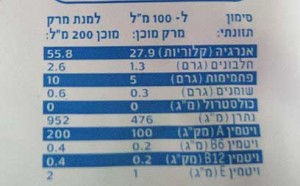
Today we’re going to look at another item on the Nutrition Facts section of packaged food – protein.


[audioclip url=”https://archive.ulpan.com/wp-content/uploads/2014/10/לייבש-1.m4a” /]לְיַבֵּשׁ If the Hebrew word for dry is יבש[audioclip url=”https://archive.ulpan.com/wp-content/uploads/2014/10/לייבש-2.m4a” /], the verb to dry is the active-intensive ליבש[audioclip url=”https://archive.ulpan.com/wp-content/uploads/2014/10/לייבש-1.m4a” /], sometimes spelled לייבש. For example: [audioclip url=”https://archive.ulpan.com/wp-content/uploads/2014/10/לייבש-3.m4a” /]לוקח הרבה זמן בחורף לייבש את הכביסה על המרפסת. It takes a long time in the winter to dry the laundry on the balcony. לייבש is also a slang term for making…
[audioclip url=”https://archive.ulpan.com/wp-content/uploads/2020/09/אפוי-#.m4a” /]אָפוּי To bake, in Hebrew, is the simple verb לאפות[audioclip url=”https://archive.ulpan.com/wp-content/uploads/2020/09/אפוי-#.m4a” /]. Its root is א.פ.ה[audioclip url=”https://archive.ulpan.com/wp-content/uploads/2020/09/אפוי-#.m4a” /]: the ה[audioclip url=”https://archive.ulpan.com/wp-content/uploads/2020/09/אפוי-#.m4a” /], a weak letter, becomes a ו[audioclip url=”https://archive.ulpan.com/wp-content/uploads/2020/09/אפוי-#.m4a” /] or י[audioclip url=”https://archive.ulpan.com/wp-content/uploads/2020/09/אפוי-#.m4a” /] in various formations, as in the word אפוי[audioclip url=”https://archive.ulpan.com/wp-content/uploads/2020/09/אפוי-#.m4a” /] – baked. For example: [audioclip url=”https://archive.ulpan.com/wp-content/uploads/2020/09/אפוי-#.m4a” /]הם מכינים דג אפוי…
[audioclip url=”https://archive.ulpan.com/wp-content/uploads/2015/05/קופצני-1.m4a” /]קוֹפְצָנִי You may know the Hebrew word for to jump – לקפוץ[audioclip url=”https://archive.ulpan.com/wp-content/uploads/2015/05/קופצני-2.m4a” /], also jumping. For example: [audioclip url=”https://archive.ulpan.com/wp-content/uploads/2015/05/קופצני-3.m4a” /]לא לקפוץ מהגג! No jumping from the roof! A jumpy person, for better or for worse, is קופצני[audioclip url=”https://archive.ulpan.com/wp-content/uploads/2015/05/קופצני-1.m4a” /] if he’s a male and קוצפנית[audioclip url=”https://archive.ulpan.com/wp-content/uploads/2015/05/קופצני-4.m4a” /] if she’s a female. קופצני also applies…
[audioclip url=”https://archive.ulpan.com/wp-content/uploads/2014/10/תחרותי-1.m4a” /]תַּחֲרוּתִי The Hebrew word for competition is תחרות[audioclip url=”https://archive.ulpan.com/wp-content/uploads/2014/10/תחרותי-5.m4a” /], which I discussed around the time of the US presidential election four years ago. In that post I point out that this word’s root is ח.ר.ה[audioclip url=”https://archive.ulpan.com/wp-content/uploads/2014/10/תחרותי-2.m4a” /] meaning anger or wrath – which makes sense, since competition requires the type of energy that often comes with anger. Someone competitive…
[audioclip url=”https://archive.ulpan.com/wp-content/uploads/2018/12/מבוגר-#.m4a” /]מְבֻגָּר The Hebrew word for mature is בוגר[audioclip url=”https://archive.ulpan.com/wp-content/uploads/2018/12/מבוגר-#.m4a” /] for a male and בוגרת[audioclip url=”https://archive.ulpan.com/wp-content/uploads/2018/12/מבוגר-#.m4a” /] for a female. Someone elderly or mature in the sense of age is מבוגר[audioclip url=”https://archive.ulpan.com/wp-content/uploads/2018/12/מבוגר-#.m4a” /] or מבוגרת[audioclip url=”https://archive.ulpan.com/wp-content/uploads/2018/12/מבוגר-#.m4a” /]. For example: [audioclip url=”https://archive.ulpan.com/wp-content/uploads/2018/12/מבוגר-#.m4a” /]שוחחתי היום עם אישה מבוגרת שגרה בעיר העתיקה. I spoke today with an elderly woman…