how to say “monster” in Hebrew
מִפְלֶצֶת[audioclip url=”https://archive.ulpan.com/wp-content/uploads/2014/10/מפלצת-1.mp3″ /]
I’m excited for Jurassic World, a sequel to Jurassic Park ten years in the making. Some describe dinosaurs – in Hebrew, דִּינוֹזָאוּרִים[audioclip url=”https://archive.ulpan.com/wp-content/uploads/2014/10/מפלצת-2.mp3″ /] – as monsters.
The Hebrew word for monster is מִפְלֶצֶת[audioclip url=”https://archive.ulpan.com/wp-content/uploads/2014/10/מפלצת-1.mp3″ /], a word that appears once in Biblical Hebrew (מְלָכִים א’, פֶּרֶק ט”ו[audioclip url=”https://archive.ulpan.com/wp-content/uploads/2014/10/מפלצת-3.mp3″ /] – I Kings, chapter 16), where it refers to a scary-looking object.
Even though the word has a feminine ending, it word refers to both male and female monsters alike. For example: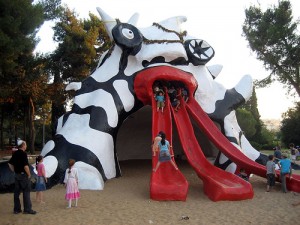
[audioclip url=”https://archive.ulpan.com/wp-content/uploads/2014/10/מפלצת-4.mp3″ /]דְּרָקוּלָה הוּא מִפְלֶצֶת.
Dracula is a monster.
As with the English monster, מפלצת also refers to a conglomerate, and not necessary one that evokes fear. Likewise, מִפְלַצְתִּי[audioclip url=”https://archive.ulpan.com/wp-content/uploads/2014/10/מפלצת-5.mp3″ /] means monstrous. For example:
[audioclip url=”https://archive.ulpan.com/wp-content/uploads/2014/10/מפלצת-6.mp3″ /]הַחֶבְרָה צָמְחָה לְגֹדֶל מִפְלַצְתִּי.
The company grew to a monstrous size.