how to say “autumn” in Hebrew


having trouble seeing the print?

סְתָו


There’s still room in our post-holidays classes.


Some places in the world have four distinct seasons: summer, fall, winter, spring. But in regions such as Israel, there really was no need in ancient times for four names, since there were times when it was cold, and times when it was hot; times when it rained and times when the skies were blue.

Thus the word for autumn – סְתָו (stahv) – is a relatively new one in Hebrew. The word appears in the biblical שִׁיר הַשִּׁירִים – Song of Songs (sheer hah-shee-REEM), but there it refers to the winter.
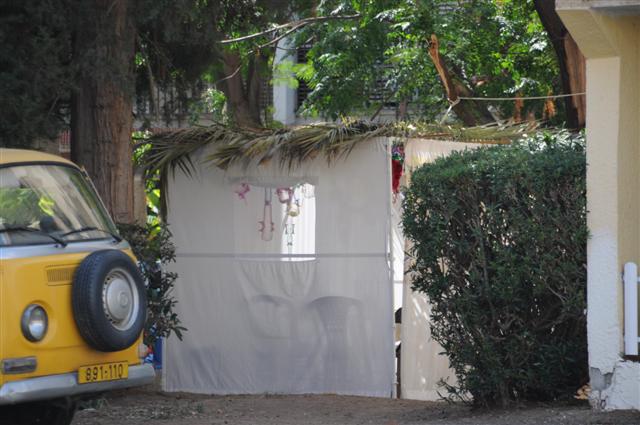

In any case, the holiday of סֻכּוֹת – Tabernacles (soo-KOHT) – heralds the end of the קַיִץ – summer (KAH-yeets) and the beginning of the rainy season… or, in borrowed terms, הַסְתָו – the fall (hah-STAHV).

חָג שָׂמֵחַ!

Happy (Sukkot) holiday!


Make this dose of Hebrew yours by using it in a sentence. You can write your sentence on the wall of our Facebook page, and we’ll correct it for you if it’s got errors.
You can further build your
Hebrew vocabulary with…
with a special discount for
Ktzat Ivrit enthusiasts like yourself

Similar Posts

  • how to say “later” in Hebrew

    [audioclip url=”https://archive.ulpan.com/wp-content/uploads/2021/04/יותר-מאוחר-#.m4a” /]יוֹתֵר מְאוּחָר The Hebrew word for late is מאוחר[audioclip url=”https://archive.ulpan.com/wp-content/uploads/2021/04/יותר-מאוחר-#.m4a” /] – or מאוחרת[audioclip url=”https://archive.ulpan.com/wp-content/uploads/2021/04/יותר-מאוחר-#.m4a” /] when referring to something grammatically feminine such as an hour: [audioclip url=”https://archive.ulpan.com/wp-content/uploads/2021/04/יותר-מאוחר-#.m4a” /]השעה כבר מאוחרת. The hour is already late. How about later? That’s יותר מאוחר[audioclip url=”https://archive.ulpan.com/wp-content/uploads/2021/04/יותר-מאוחר-#.m4a” /] or מאוחר יותר[audioclip url=”https://archive.ulpan.com/wp-content/uploads/2021/04/יותר-מאוחר-#.m4a” /] (the order doesn’t really matter).  You…

  • daily video – how to say “wise” in Hebrew

    To slow down the audio, start playing the video and then click the settings icon at the bottom-right of the video and change the playback speed. תמליל של הכתוביות בעברית אהלן חברים יקרים נסעתם פעם ברכבת בישראל? ביקרתם פעם בתחנה החדשה בירושלים? (תחנת יצחק נבון) זו תחנה מעניינת מאוד היא נמצאת 80 מטר מתחת לאדמה...
  • how to say “mosquito” in Hebrew

    [audioclip url=”https://archive.ulpan.com/wp-content/uploads/2014/10/יתוש-1.m4a” /]יַתּוּשׁ The Hebrew word for mosquito first appears in Mishnaic Hebrew. The word is יתוש[audioclip url=”https://archive.ulpan.com/wp-content/uploads/2014/10/יתוש-1.m4a” /]. For example: [audioclip url=”https://archive.ulpan.com/wp-content/uploads/2014/10/יתוש-2.m4a” /]יש פה הרבה יתושים בגלל האגם. There are a lot of mosquitoes here because of the lake.  A mosquito bite is עקיצת יתוש[audioclip url=”https://archive.ulpan.com/wp-content/uploads/2014/10/יתוש-3.m4a” /], where עקיצה[audioclip url=”https://archive.ulpan.com/wp-content/uploads/2014/10/יתוש-4.m4a” /] (the unconnected form of…

  • how to say “to transpire” or “to take place” in Hebrew

    [audioclip url=”https://archive.ulpan.com/wp-content/uploads/2014/10/להתרחש-1.m4a” /]לְהִתְרַחֵשׁ There’s the simple verb in English to happen, whose Hebrew equivalent is לקרות[audioclip url=”https://archive.ulpan.com/wp-content/uploads/2014/10/להתרחש-2.m4a” /], a simple verb. For example: [audioclip url=”https://archive.ulpan.com/wp-content/uploads/2014/10/להתרחש-3.m4a” /]מה קרה? What happened? Then there are higher words, such as to transpire and to take place. These in Hebrew are the reflexive-intensive להתרחש[audioclip url=”https://archive.ulpan.com/wp-content/uploads/2014/10/להתרחש-1.m4a” /]. For example: [audioclip url=”https://archive.ulpan.com/wp-content/uploads/2014/10/להתרחש-4.m4a” /]דבר מהפכני מתרחש במזרח התיכון. Something…

  • how do you say “protest” in Hebrew?

    [audioclip url=”https://archive.ulpan.com/wp-content/uploads/2015/05/מחאה-1.m4a” /]מְחָאָה Curiously, the word for protest – מחאה[audioclip url=”https://archive.ulpan.com/wp-content/uploads/2015/05/מחאה-1.m4a” /] – is related to the expression to clap hands – למחוא כפיים[audioclip url=”https://archive.ulpan.com/wp-content/uploads/2015/05/מחאה-2.m4a” /]. That’s because sometimes clapping hands isn’t always about appreciation or adoration, but rather sometimes it’s what a director might do to get their crew to focus – protesting what’s going on…