
how (and why) to say “bell” in Hebrew
פַּעֲמוֹן

As Aaron the High Priest would advance step by careful step into the holiest chamber, little bells attached to his garments would chime, as if to announce his presence.

The Hebrew word for bell is פַּעֲמוֹן . You may recognize its root as פ.ע.מ (p.a.m), the same as the word for instance or time – פַּעַם – as in:
. You may recognize its root as פ.ע.מ (p.a.m), the same as the word for instance or time – פַּעַם – as in:עוֹד פַּעַם!
another time! (or again!)
and
פַּעַם אַחַת
one time (פעם is a feminine noun)
What, if anything, does an instance have to do with a bell?
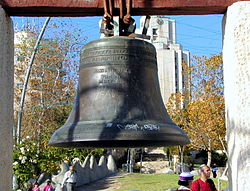
Well, the core meaning of the root פ.ע.מ is a tread of two legs: פעם in the sense of instance once referred specifically to the instance of a person taking a step.
And thus a פעמון, a bell, once rang specifically when someone such as the high priest took a step, as it was attached to his garment.
Today we find פַּעֲמוֹנִים – bells – in many other places, such as:
– bells – in many other places, such as:גַּן הַפַּעֲמוֹן
(Liberty) Bell Park (literally, the park of the bell)
and in Ehud Banai’s song אַל תִּפְחַד – Don’t Be Afraid:
– Don’t Be Afraid:וְעַכְשָׁו פַּעֲמוֹנֵי אַזְהָרָה מְצַלְצְלִים בְּרֹאשְׁךָ…
and now, warning bells are ringing in your (a male’s) head…