how to say “continuity” in Hebrew


הֶמְשֵׁכִיּוּת


In honor of יוֹם הַשּׁוֹאָה (yohm hah-shoh-AH) – Holocaust Memorial Day… in reverence of the six million.
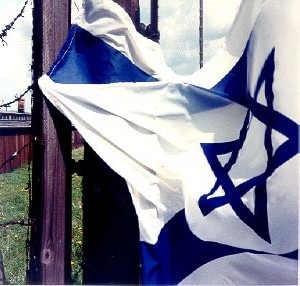


My grandfather was one of many youth leaders in Budapest in 1948 who operated underground in a tireless effort to rescue Jews of Hungary from the grips of the Nazi expulsion and extermination. His parents were murdered in the camps. He and my great uncle Itzhak survived.


Meanwhile, in another part of Hungary, my grandmother was deported from her home town Seilush with her family to Auschwitz. Her parents and four of her siblings were murdered. She and my great uncle Avigdor, who passed his Bar Mitzvah in the camp, survived.


The two arrived in then Palestine (the Latin, not Arabic, name for the Land of Israel) after a very long journey, where they met, fell in love, and married within a week of the declaration of the State of Israel.

Among their many other acts of heroism, my grandparents – along with so many other Jews – enabled continuity of the Jewish people through their marriage. The Hebrew word for continuity is הֶמְשֵׁכִיּוּת (hem-sheh-khee-YOOT). It derives from הֶמְשֵׁך (hem-SHEKH) – continuation, as well as לְהַמְשִׁיך (leh-hahm-SHEEKH) – to continue doing something.


Another usage of המשך is in the Hebrew equivalent of the phrase, Have a good rest-of-the-day – הֶמְשֵׁך יוֹם טוֹב (hem-SHEKH yohm tohv).


May it be one.



Similar Posts

  • how to say “to forbid” in Hebrew

      having trouble seeing the print? לֶאֱסוֹר     Our popular Hebrew classes start next week around the country!   Spots are still available. לֶאֱסוֹר, an active-simple פָּעַל verb, means to forbid. Its origin goes back to Biblical Hebrew, where it means to bind someone or something or to tie up. Here’s a Modern-Hebrew example:   אָסַרְתִּי עָלָיו לַחְצוֹת אֶת הַכְּבִישׁ…

  • Weekly Hebrew Review – all kinds, greenery and the world as its custom

    חֹמֶר לְשִׁנּוּן[audioclip url=”https://archive.ulpan.com/wp-content/uploads/2014/10/review-1.mp3″ /] Review Material Can’t read Hebrew yet? You spent time on your Hebrew this week. Use these review materials to make it yours to keep. Flashcards . Scatter . Gravity . Test [audioclip url=”https://archive.ulpan.com/wp-content/uploads/2014/10/review-2.mp3″ /]שבת שלום, וסוף שבוע נעים! Shabbat Shalom, and have a nice weekend!

  • how to say “my favorite food” in Hebrew

    [audioclip url=”https://archive.ulpan.com/wp-content/uploads/2020/03/המאכל-הכי-אהוב-עלי-#.m4a” /]הַמַּאֲכָל הֲכִי אָהוּב עָלַי The basic Hebrew word for food is אוכל[audioclip url=”https://archive.ulpan.com/wp-content/uploads/2020/03/המאכל-הכי-אהוב-עלי-#.m4a” /], while to eat is the simple verb לאכול[audioclip url=”https://archive.ulpan.com/wp-content/uploads/2020/03/המאכל-הכי-אהוב-עלי-#.m4a” /]. A particular food, though, is מאכל[audioclip url=”https://archive.ulpan.com/wp-content/uploads/2020/03/המאכל-הכי-אהוב-עלי-#.m4a” /]. For example: [audioclip url=”https://archive.ulpan.com/wp-content/uploads/2020/03/המאכל-הכי-אהוב-עלי-#.m4a” /]מה המאכל הכי אהוב עלי? What’s my favorite food? Let’s break down this example: מה המאכל[audioclip url=”https://archive.ulpan.com/wp-content/uploads/2020/03/המאכל-הכי-אהוב-עלי-#.m4a” /] –…

  • how to say “agent” in Hebrew

    [audioclip url=”https://archive.ulpan.com/wp-content/uploads/2019/12/סוכן-#.m4a” /]סוֹכֵן Yesterday we encountered ביטוח לאומי[audioclip url=”https://archive.ulpan.com/wp-content/uploads/2019/12/סוכן-#.m4a” /], Israel’s National Insurance agency. Another Israeli government-related institution you may know is הסוכנות היהודית[audioclip url=”https://archive.ulpan.com/wp-content/uploads/2019/12/סוכן-#.m4a” /] – The Jewish Agency. סוכנות[audioclip url=”https://archive.ulpan.com/wp-content/uploads/2019/12/סוכן-#.m4a” /] derives from the word סוכן[audioclip url=”https://archive.ulpan.com/wp-content/uploads/2019/12/סוכן-#.m4a” /] meaning agent, as in: [audioclip url=”https://archive.ulpan.com/wp-content/uploads/2019/12/סוכן-#.m4a” /]דוד, יש לך סוכן ביטוח? David, do you have an insurance…

  • how to say “to follow” in Hebrew

    [audioclip url=”https://archive.ulpan.com/wp-content/uploads/2018/07/לעקוב-#.m4a” /]לַעֲקֹב If you’ve got a good eye for Hebrew roots and a familiarity with Biblical figures, you might spot the connection between the פעל verb לעקוב[audioclip url=”https://archive.ulpan.com/wp-content/uploads/2018/07/לעקוב-#.m4a” /] – to follow, and יעקב[audioclip url=”https://archive.ulpan.com/wp-content/uploads/2018/07/לעקוב-#.m4a” /] – Jacob, right away: the root ע.ק.ב[audioclip url=”https://archive.ulpan.com/wp-content/uploads/2018/07/לעקוב-#.m4a” /] means heel, so that when we follow someone, we’re tracing their footsteps. לעקוב…