how to say “boundary” in Hebrew
having trouble seeing the print?
register for fall classes
with Ulpan La-Inyan!
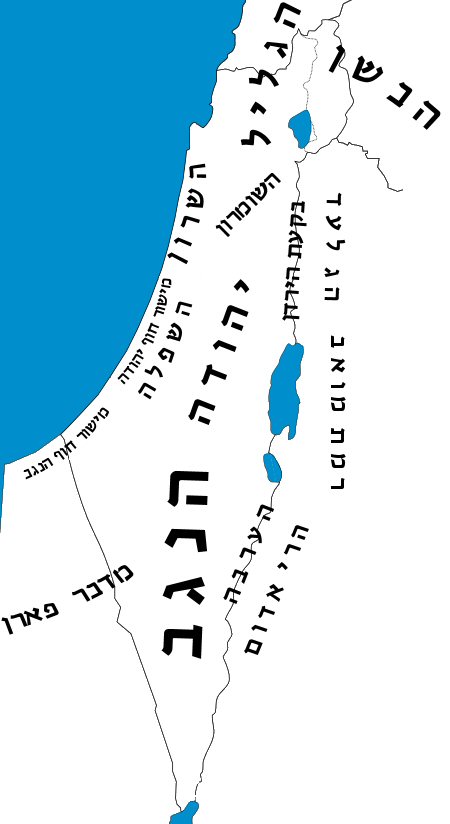 The Torah portion to be read this Shabbat by Jews around the world falls smack in the middle of the fifth of Five Books of Moses, סֵפֶר דְּבָרִים (SEH-fehr deh-vah-REEM) – The Book of Deuteronomy, or literally, The Book of Words. ספר דברים and its narrator, Moses, concern themselves primarily with preparing the Children of Israel for entering their land – present-day Israel – and thus a word that pops up over and over in the book, as well as in this week’s portion, is גְּבוּל (gheh-VOOL) – border or boundary.
Despite the word’s masculine gender, it appears feminine in the plural: גְּבוּלוֹת (gheh-voo-LOHT). However, since the word is masculine in the singular form, it behaves like a masculine noun, even in the plural, when described by an adjective. For example:
 For instance, the term setting boundaries, in Hebrew, is לְהַצִּיב גְּבוּלוֹת (leh-hah-TSEEV gheh-voo-LOHT).
I find it interesting that the root of boundary – ג.ב.ל (g.b.l), is almost identical to that of bravery, manhood and heroism – ג.ב.ר (g.b.r). I am convinced that the two roots share a core concept, since the first two root letters are identical, and since the sounds l and r have a tendency to alternate among languages and sometimes within languages.
If you agree with me on the commonality, how do you understand the connection between ג.ב.ל and ג.ב.ר?
Use the “comments” form below to say your piece.
Shabbat Shalom, and a pleasant weekend to all!
(shah-BAHT shah-LOHM, veh-SOHF shah-VOO-ah nah-EEM leh-khoo-LAHM)
Hebrew vocabulary with…
 |
| with a special discount for Ulpan La-Inyan enthusiasts like yourself |