

how to say “the sun is a liar” in Hebrew
[audioclip url=”https://archive.ulpan.com/wp-content/uploads/2022/01/שמש-שקרנית-#.m4a” /]שֶׁמֶשׁ שַׁקְרָנִית
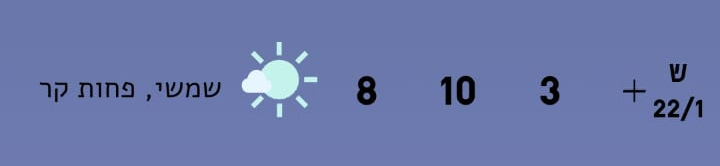
The icon for the sun today on the Jerusalem weather app, ירושמיים[audioclip url=”https://archive.ulpan.com/wp-content/uploads/2022/01/שמש-שקרנית-#.m4a” /], is pale blue. Had I taken this screenshot yesterday, you would have seen the text שמש שקרנית[audioclip url=”https://archive.ulpan.com/wp-content/uploads/2022/01/שמש-שקרנית-#.m4a” /] – a lying sun – next to the icon (now it says שמשי, פחות קר[audioclip url=”https://archive.ulpan.com/wp-content/uploads/2022/01/שמש-שקרנית-#.m4a” /] – sunny, less cold).
What is a שמש שקרנית? It’s when the sun is shining but not giving much warmth, or otherwise enough UVs to provide a tan.
In context:
[audioclip url=”https://archive.ulpan.com/wp-content/uploads/2022/01/שמש-שקרנית-#.m4a” /]אין טעם ללכת לים – היום יש שמש שקרנית.
There’s no point in going to the beach – today there’s a lying sun.
שקרנית[audioclip url=”https://archive.ulpan.com/wp-content/uploads/2022/01/שמש-שקרנית-#.m4a” /] is the feminine version of the word שקרן[audioclip url=”https://archive.ulpan.com/wp-content/uploads/2022/01/שמש-שקרנית-#.m4a” /] – liar. It’s the feminine version since שמש[audioclip url=”https://archive.ulpan.com/wp-content/uploads/2022/01/שמש-שקרנית-#.m4a” /] is a feminine noun in spoken Hebrew – in literary and biblical Hebrew it’s sometimes masculine.