how to say “preparedness” in Hebrew


כּוֹנְנוּת


In spite of existential threat, life goes on in Israel. Of course, we prepare for whatever calamity may threaten us, including setting up an “iron dome” and an alarm system so that the residents of towns bombarded daily from Gaza have a safety plan.


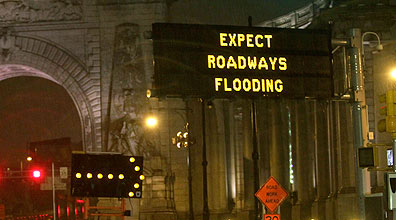
Likewise, the people living on the eastern seaboard of the United States stand in preparedness.


The Hebrew expression preparedness or readiness is כּוֹנְנוּת (koh-neh-NOOT). For example, צָהָ”ל עוֹמֵד בּכוֹנְנוּת בִּפְנֵי כָּל אִיּוּם – the IDF (Israel Defense Forces) stands in preparedness in the face of any threat (TSAH-hahl oh-MED beh-khoh-neh-NOOT beef-NEH-ee kohl ee-YOOM).

A soldier on alert


כ.ו.נ (k.w.n), the root of כוננות, is the same as that of a list of words that may be familiar to you:
כֵּן – yes (ken)
נָכוֹן – correct (nah-KHOHN)
מוּכַן – ready (moo-KHAHN)
לְהִתְכּוֹנֵן – to get ready (leh-heet-koh-NEN)
מְכוֹנָה – machine (meh-khoh-NAH)
מְכוֹנִית – car, automobile (meh-khoh-NEET)
and more.


This ubiquitous root means establishment or firmness. Thus our word, כוננות, can be understood as standing firm or poised, well established in the wake of alarm.


Today’s dose of Hebrew is sponsored by Yom Tov


I’ve seen his amazing art at Hechal Shlomo and even acquired a piece myself.

Check out Yom Tov’s virtual gallery,
and visit his Kohelet exhibition in Jerusalem.
It’s open 
throughout the summer.


Similar Posts

  • how to say “to absorb” in Hebrew

    [audioclip url=”https://archive.ulpan.com/wp-content/uploads/2015/05/לספוג-1.m4a” /]לִסְפּוֹג If you’ve been in Israel over חנוכה[audioclip url=”https://archive.ulpan.com/wp-content/uploads/2015/05/לספוג-2.m4a” /] (Hanukkah), you certainly know the word for that special jelly doughnut – סופגניה[audioclip url=”https://archive.ulpan.com/wp-content/uploads/2015/05/לספוג-3.m4a” /]. סופגניה derives from the simple verb לספוג[audioclip url=”https://archive.ulpan.com/wp-content/uploads/2015/05/לספוג-1.m4a” /] – to absorb, since the pastry is capable of absorbing lots of oil. לספוג is used in the literal sense, as well…

  • How to say “used to be” in Hebrew

    [audioclip url=”https://archive.ulpan.com/wp-content/uploads/2018/04/פעם-היה-1.m4a” /]פַּעַם הָיָה Sometimes there’s a gap between what we say and what we mean, and I’m not talking about lying. Take for example the expression used to be in English – what does once upon a time have to do with using? Hebrew’s term for this is more straightforward: פעם [audioclip url=”https://archive.ulpan.com/wp-content/uploads/2018/04/פעם-היה-2.m4a” /], literally,…

  • לטייל – Israel’s national pastime

    לטייל   If you’ve spent leisurely time in Israel, you’ve certainly become acquainted with the word טִיּוּל (tee-YOOL) – a leisurely trip. You likely associate it with hiking… which is what Israelis often do in their time off (hence the title of this blog entry), and since טיול doesn’t have the most accurate translation into…

  • how to say “hairy” in Hebrew

    [audioclip url=”https://archive.ulpan.com/wp-content/uploads/2015/05/שעיר-1.m4a” /]שָׂעִיר While שיער[audioclip url=”https://archive.ulpan.com/wp-content/uploads/2015/05/שעיר-2.m4a” /] refers to hair in general, שערות[audioclip url=”https://archive.ulpan.com/wp-content/uploads/2015/05/שעיר-3.m4a” /] refers to individual hairs. Nevertheless, שערות can also refer to simply hair. For example: [audioclip url=”https://archive.ulpan.com/wp-content/uploads/2015/05/שעיר-4.m4a” /]אל תשכח לחפוף שערות. Don’t forget to wash your (the) hair. (spoken to a male) Hairy is שעיר[audioclip url=”https://archive.ulpan.com/wp-content/uploads/2015/05/שעיר-1.m4a” /] when referring to a male…

  • daily video – how to say “reading comprehension” in Hebrew

    To slow down the audio or to turn on captions (CC), start playing the video and then click the settings icon ⚙️. LEARNING TIPS Hebrew beginners Watch with English captions a few times, then with Hebrew captions, then without captions, and see what you understand. Intermediate learners Watch without captions, pausing to write down what...
  • how to say “to save a spot” in Hebrew

      לְשַרְיֵן         First of all, a correction: The Modern Hebrew word for jet lag – יַעֶפֶת (yah-EH-fet) comes from the root י.ע.פ (y.a’.f), meaning flight. It doesn’t come from the acrobatic linguistic act I described the other day. Thanks for the tip, Larry. Now for today’s dose… The proper way of saying save me…